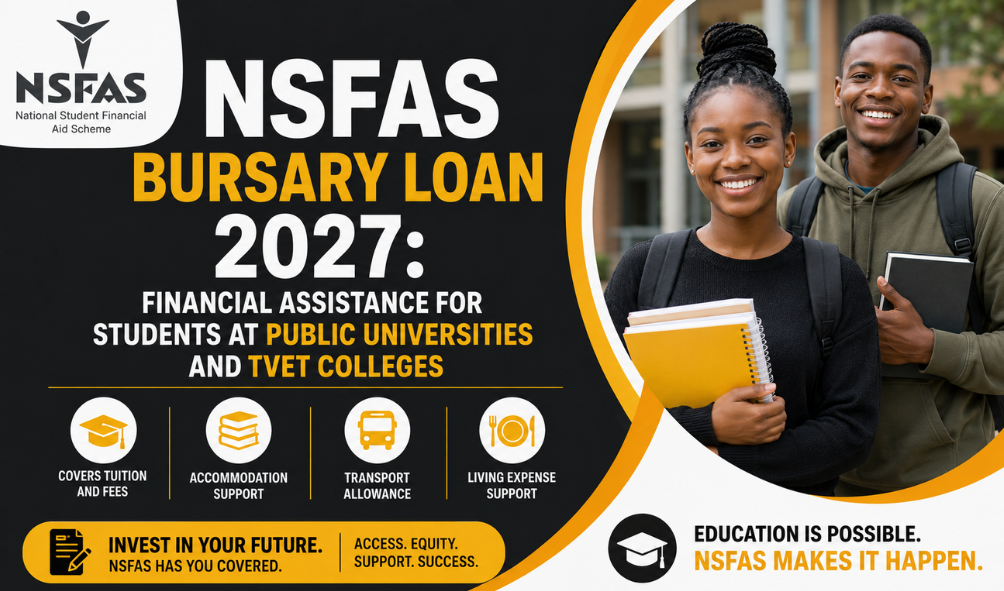
Pursuing higher education is one of the most important investments you can make in your future, but for many South African families, the cost of studying can be a significant challenge. Fortunately, the National Student Financial Aid Scheme (NSFAS) exists to help eligible students achieve their academic goals without the burden of overwhelming financial expenses.
If you are planning to study at a public university or Technical and Vocational Education and Training (TVET) college, or if you are already enrolled, you could qualify for financial support through the NSFAS bursary programme. This government-funded initiative is designed to ensure that financially deserving students have access to quality higher education regardless of their economic circumstances.
In this guide, we explain everything you need to know about NSFAS, including who qualifies, what expenses are covered, who should not apply, and why this funding opportunity is so important for South African students.
What Is NSFAS?
The National Student Financial Aid Scheme (NSFAS) is a public entity operating under South Africa’s Department of Higher Education and Training (DHET). It was established through the National Student Financial Aid Scheme Act (Act 56 of 1999) with the primary objective of providing financial assistance to students from low-income and working-class households.
NSFAS aims to remove financial barriers that prevent talented students from accessing higher education. By covering essential study-related expenses, the scheme allows students to focus on their academic success instead of worrying about tuition fees and living costs.
Every year, thousands of students benefit from NSFAS funding, making it one of South Africa’s largest education support programmes.
Why NSFAS Is Important
Higher education opens doors to better employment opportunities, career growth, and improved earning potential. However, many families struggle to afford university or college fees.
NSFAS helps bridge this gap by ensuring that deserving students receive financial assistance to complete their qualifications. The programme supports students pursuing certificates, diplomas, and degrees at approved public institutions across South Africa.
Instead of allowing financial hardship to prevent talented young people from reaching their potential, NSFAS creates opportunities that contribute to economic development and skills growth throughout the country.
What Does the NSFAS Bursary Cover?
NSFAS funding is designed to assist students with the major costs associated with studying. The exact value of allowances may change in line with the latest Department of Higher Education and Training (DHET) guidelines, but the bursary generally covers a wide range of educational expenses.
Funding for University Students
Students studying at public universities may receive financial assistance for the following:
Tuition Fees
Approved students receive funding for their tuition fees according to the fees charged by their institution.
Accommodation
Accommodation costs are covered based on the actual fees charged by the university. Students staying in private accommodation may also qualify, provided the accommodation costs do not exceed the approved limits applicable to university residences.
Transport Allowance
Students who travel to campus and live within 40 kilometres of their institution may receive a transport allowance of up to R7,500 per academic year.
Living Allowance
Eligible students receive a living allowance of approximately R15,000 per year to assist with everyday expenses while studying.
Learning Materials
Students are provided with a learning materials or book allowance of approximately R5,200 annually, helping them purchase textbooks, stationery, and other academic resources.
Personal Care Allowance
Students living in catered university residences may qualify for an additional personal care allowance of approximately R2,900 per year.
NSFAS Support for TVET College Students
Students enrolled at public TVET colleges can also benefit from comprehensive financial assistance.
Accommodation Allowance
Accommodation funding depends on where the student resides:
- Urban accommodation: Up to R24,000 per year
- Peri-urban accommodation: Up to R18,900 per year
- Rural accommodation: Up to R15,750 per year
Transport Allowance
Students travelling up to 40 kilometres from their institution may qualify for transport support of approximately R7,350 per year.
Some students may also qualify for an annual transport allowance of approximately R7,000, depending on their circumstances and approved funding guidelines.
Personal Care Allowance
Eligible TVET students may receive an incidental or personal care allowance of approximately R2,900 per year.
These allowances help students meet their basic living needs while remaining focused on completing their studies successfully.
Who Qualifies for NSFAS Funding?
Not every student automatically qualifies for NSFAS funding. Applicants must meet specific eligibility requirements.
You may qualify if you meet one or more of the following conditions:
- You are a South African citizen.
- You intend to study or are currently studying at a public university or public TVET college.
- Your combined annual household income is R350,000 or less.
- You are a recipient of a SASSA grant.
- You are a student living with a disability and your combined household income is R600,000 or less.
- You began your studies before 2018 and your household income is R122,000 or less.
Meeting these requirements does not automatically guarantee funding, but eligible applicants are considered according to NSFAS policies and available funding.
NSFAS and SASSA Beneficiaries
Students who receive grants from the South African Social Security Agency (SASSA) are generally eligible for NSFAS funding, provided they satisfy the remaining application requirements.
This ensures that vulnerable students from financially disadvantaged households have improved access to higher education opportunities.
Support for Students Living with Disabilities
NSFAS recognises that students living with disabilities may require additional support during their studies.
To accommodate these students, the household income threshold is higher than the standard requirement. Applicants with disabilities may qualify if their combined household income does not exceed R600,000 per year.
Additional disability-related support may also be available where applicable and subject to NSFAS guidelines.
Who Should Not Apply?
Although NSFAS assists many students, there are situations where applications are not appropriate.
You should generally not apply if:
- You have already completed a previous higher education qualification.
- Your combined annual household income exceeds R350,000 (unless the disability threshold applies).
- You are already an NSFAS-funded student whose funding continues automatically because you remain academically eligible.
Returning students who are already funded usually do not need to submit a new application every year, provided they continue meeting the academic progression requirements established by NSFAS.
Maintaining Your NSFAS Funding
Receiving funding is only the first step. Students must continue meeting the academic standards set by their institution and NSFAS.
To remain funded throughout your studies, you should:
- Attend classes regularly.
- Complete all required assessments.
- Pass your modules according to institutional progression rules.
- Register for approved qualifications.
- Comply with all NSFAS funding conditions.
Failure to meet academic requirements may affect future funding eligibility.
Benefits of Applying for NSFAS
NSFAS offers far more than simply paying tuition fees.
The programme enables students to:
- Access higher education regardless of financial circumstances.
- Focus on studying instead of worrying about expenses.
- Reduce the need for private student loans.
- Receive assistance with accommodation and transport.
- Purchase required textbooks and learning materials.
- Improve their chances of graduating and finding meaningful employment.
For thousands of South African students, NSFAS has become the foundation for achieving educational success and building rewarding careers.
Tips Before You Apply
Before submitting an application, ensure that all your supporting information is accurate and complete.
Applicants should:
- Verify that they meet the income requirements.
- Prepare all required supporting documents.
- Ensure their personal information is correct.
- Apply within the official application period.
- Monitor their application status regularly.
NSFAS Bursary Loan 2027: Financial Assistance for Students at Public Universities and TVET Colleges
Submitting accurate information helps avoid unnecessary delays during the assessment process.
The National Student Financial Aid Scheme continues to play a vital role in making higher education accessible to students from financially disadvantaged households across South Africa. By covering essential study expenses such as tuition, accommodation, transport, books, and living allowances, NSFAS helps remove financial obstacles that might otherwise prevent capable students from pursuing their dreams.
If you are planning to study at a public university or TVET college and your family’s household income falls within the qualifying limits, applying for NSFAS could significantly reduce the financial pressure associated with higher education.
Investing in your education is an investment in your future. With the support provided through NSFAS, thousands of South Africans have been able to complete their qualifications, gain valuable skills, and improve their career prospects. If you believe you meet the eligibility requirements, make sure you submit your application during the official application period and provide all the necessary supporting documents. Taking advantage of this opportunity could be the first step toward building a brighter and more successful future.